
Google Ads vs Facebook Ads: Which Should a Service Business Run First?
 By Michael Preston · · 8 min read
- Most service businesses should start with Google Search Ads, because people are already looking for the service.
- Facebook and Instagram Ads work best when your work is visual or the decision takes time, and you have a clear offer.
- Neither platform fixes a weak funnel. Fix tracking, the landing page and follow-up first.
If you run a service business and can only start one ad platform, start with Google Search Ads in most cases. People on Google are already looking for what you do. Before you spend on either platform, run the free funnel audit to see where leads are slipping through, and make sure calls and forms are tracked. The tools I use page lists the call tracking and CRM setup I rely on.
Find Out Where Your Marketing Is Losing Money
12 quick questions. The same 5-Point Funnel Audit I run before I start work on a client's ad account.
This post compares the two platforms in plain terms: how each one finds customers, what each needs from you, and which to start with for your type of business.
The short answer
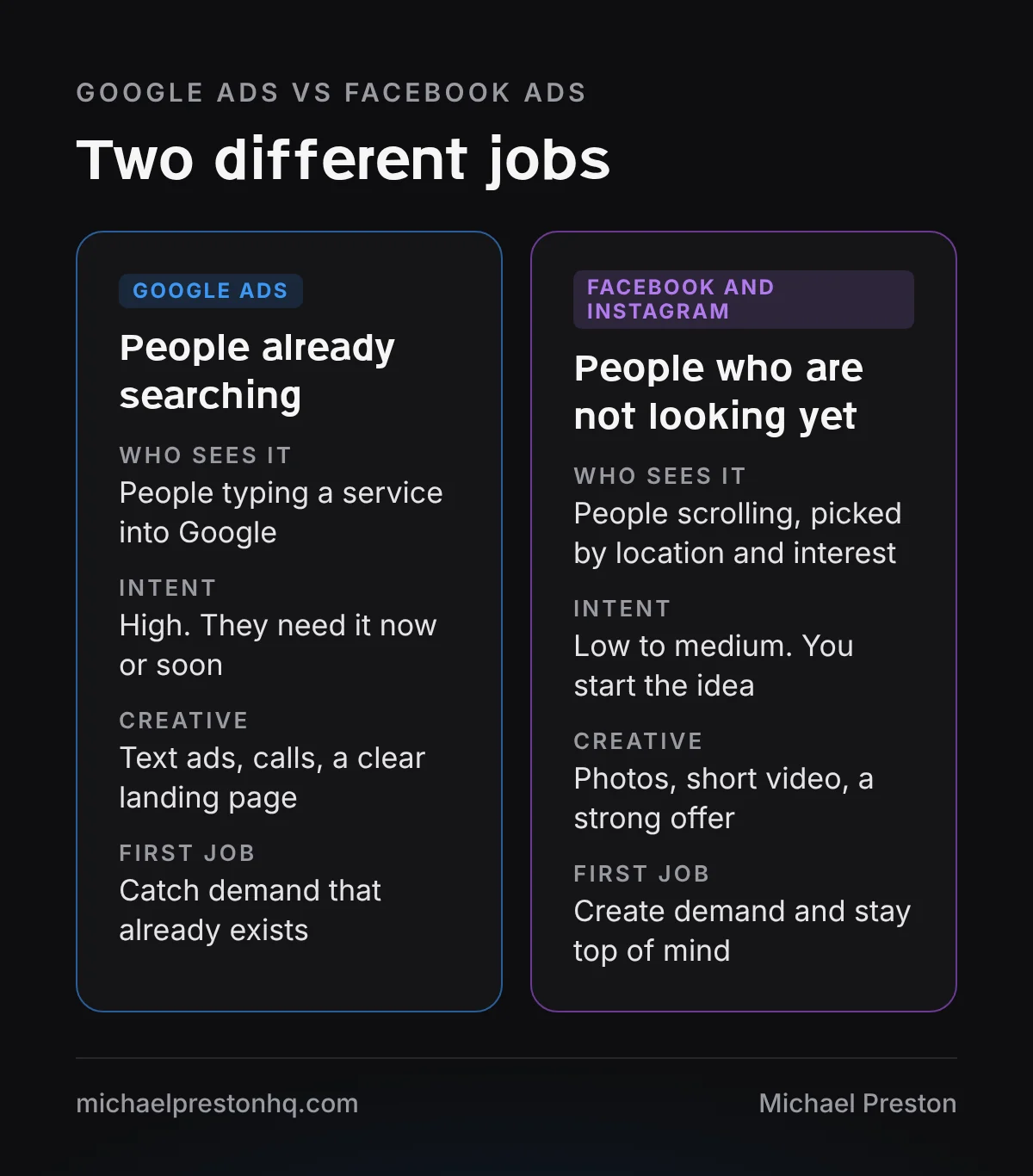
Google Ads catches demand that already exists. Someone types “emergency plumber near me” and your ad shows up. Facebook and Instagram Ads create demand. Someone scrolling sees your ad and thinks, “I should get that done.”
For urgent and common services, Google usually wins as the first platform. For visual work, or decisions people think about for weeks, Facebook and Instagram can be a strong first step. Many businesses end up running both, but rarely on day one.
How the two platforms find customers
Google Ads: people already searching
With Google Search Ads you bid on keywords. Your ad shows when someone searches for those terms in the area you choose. You pay when someone clicks or calls from the ad.
The big advantage is intent. The person has a problem and is looking for someone to solve it. Your job is to show up, look trustworthy and make it easy to call. The tradeoff is that you can only reach people who are searching, and in busy markets those clicks are competitive.
Facebook and Instagram Ads: people who aren't looking yet
Meta ads show in feeds, stories and reels. You pick a location and an audience, and Meta finds people it thinks will respond. Nobody is searching for you at that moment, so the ad has to stop the scroll and give a reason to act.
That means creative matters a lot more. You need clear photos or short videos and an offer people understand in a few seconds. The upside is reach. You can get in front of people before they need you, so you are the name they remember when they do.
Side-by-side comparison
| Google Search Ads | Facebook and Instagram Ads | |
|---|---|---|
| Intent | High. People are searching for the service. | Low to medium. You start the idea. |
| Lead speed | Often fast. Many leads call the same day. | Slower. Leads often need follow-up. |
| Creative needs | Text ads, call assets, a clear landing page. | Photos or short video and a simple offer. |
| Tracking | Calls, forms and booked jobs from search. | Lead forms, site visits and booked jobs. |
| Best for | Urgent and common services. | Visual work and longer decisions. |
One more difference: lead quality. A search lead usually knows what they want. A social lead may just be curious. That is not bad, but it means your follow-up has to do more of the work.
Which one to start with, by business type
Emergency and urgent services
Plumbing, HVAC repair, water damage, locksmiths, towing. When something breaks, people search. They do not wait for an ad to show up in their feed. Start with Google Search Ads, and look at Local Services Ads vs Google Ads if your category is eligible for Local Services Ads.
Facebook can still help later for maintenance plans or seasonal tune ups. It is rarely the right first move for emergency work.
Considered purchases and high-ticket services
Remodels, solar, pools, med spa treatments, landscaping projects. People think about these for a while. They search, but they also browse, compare and ask friends.
Here either platform can work first. If people search for your service in your area, start with Google. If search volume is thin, Facebook and Instagram can build interest with project photos and a clear next step, like a free estimate or consult.
Local businesses with a visual product
If your work looks good in a photo or a short video, social ads have an edge. Think detailing, custom closets, landscape design or anything with a clear before and after. A strong visual can do what a text ad cannot.
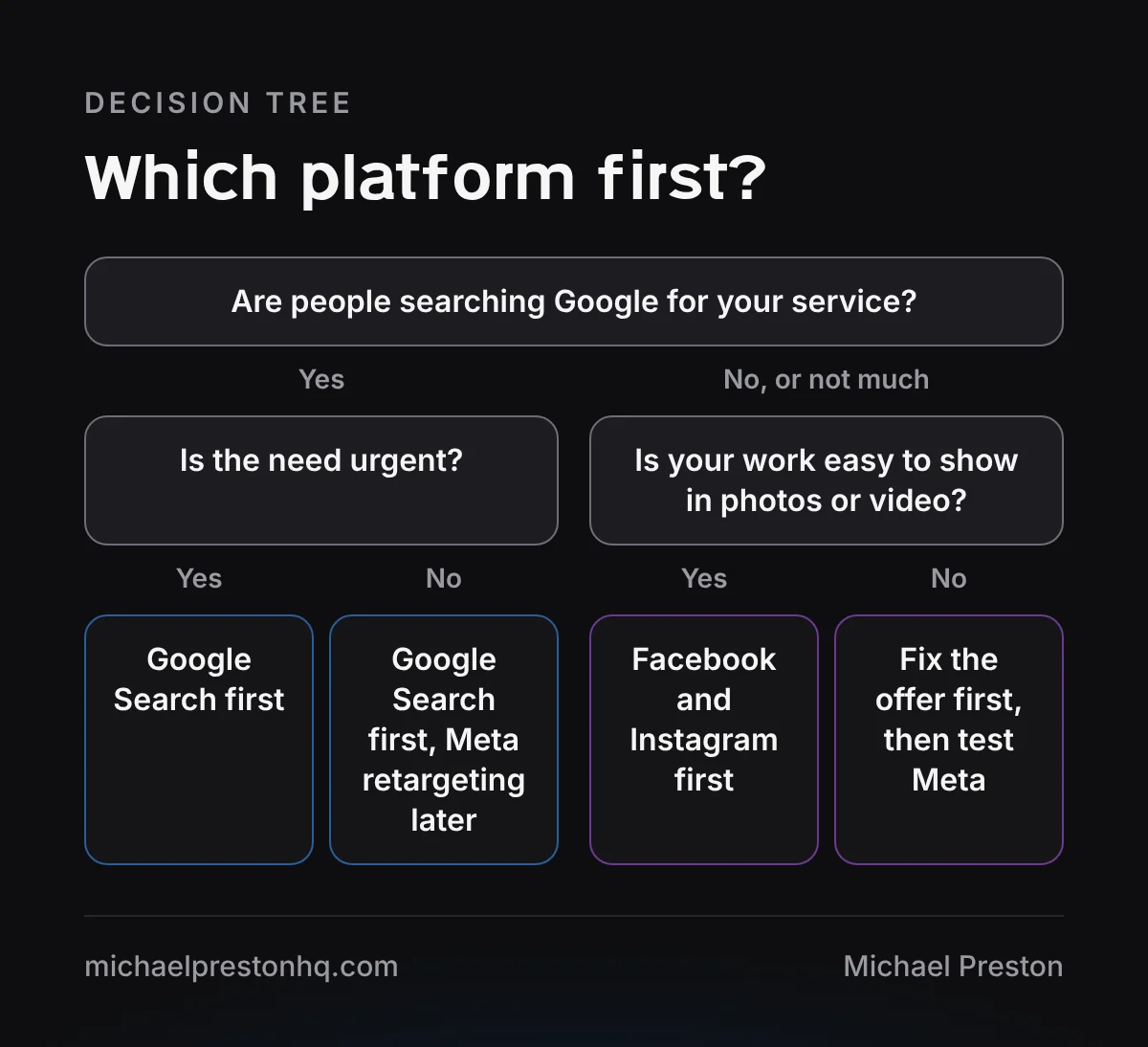
Bright Harbor Plumbing (a made-up business) mostly does emergency repairs. People search when a pipe bursts, so Google Search is the first platform. Later, it could test Facebook ads for a yearly maintenance plan aimed at homeowners nearby.
What breaks both: the funnel
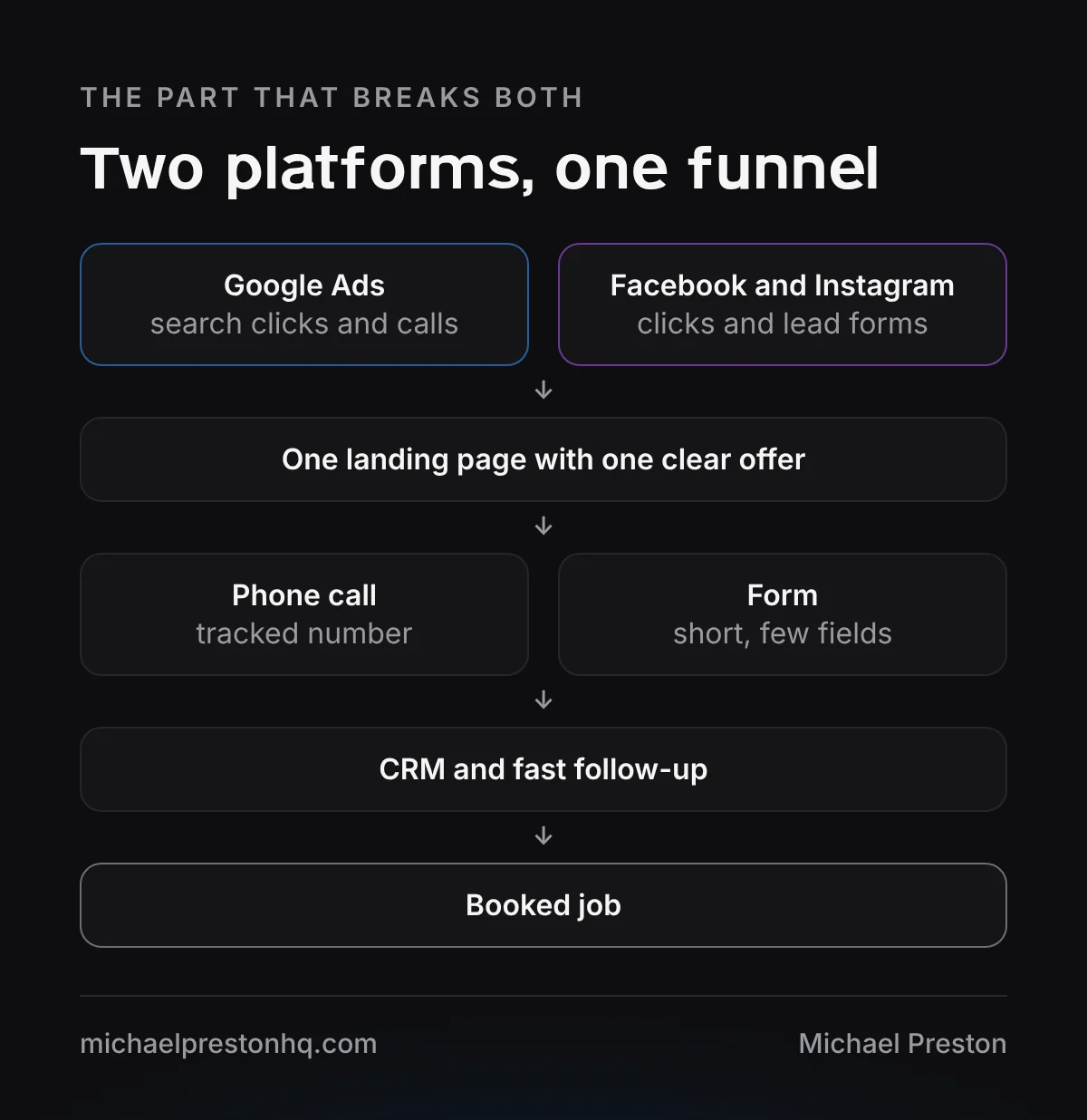
When an owner says “ads don’t work,” the platform is often not the problem. The leads came in and then leaked out. Nobody answered the phone, the landing page was slow, or the follow-up took two days.
Both platforms feed the same funnel. If the funnel is weak, switching platforms just moves the leak. Check these before you change anything:
- Tracking. Every call and form is counted, and you can tell which ones became booked jobs.
- Landing page. One page, one offer, a phone number at the top and a short form.
- Speed to lead. Someone calls or texts back fast, during the hours your ads run.
- Follow-up. Leads that do not book right away get a few more touches.
If you are setting up Google for the first time, my Google Ads setup guide for small businesses walks through campaign type, keywords and conversion tracking step by step.
When to run both
Run both once the first platform is steady. That means it brings in leads you can track, your team handles them well, and you know roughly what a booked job costs you.
A common next step is retargeting. People who visited your site from Google but did not call see your Facebook or Instagram ads for the next few weeks. It keeps you in front of warm people without starting from zero.
The other reason to add a second platform is reach. If you are already showing for most searches in your area, social ads are a way to find people before they search. Just keep the offer and the landing page the same, so you can compare the two fairly.
I also made a short video ranking marketing channels for local businesses from S tier to F tier:
Whichever way you go, decide in advance what you will measure. Calls, form leads and booked jobs are better guides than clicks or likes. Write the numbers down each week so you are comparing real results, not impressions.
Common mistakes when picking a platform
- Picking the platform a friend uses instead of the one that fits how your customers buy.
- Judging results by clicks or likes instead of calls and booked jobs.
- Running both at once with a small budget, so neither gets enough data.
- Sending ad traffic to the home page instead of a page built for that service.
This is one of the topics in my paid ads and funnels talk for business groups. If you want to talk through your own situation, send me a note.